Thursday, March 17, 2011

Doctor's orders—no more black clouds


When I'm in a pessimistic mood, I think there must be a black cloud hanging over me this semester. . . after all, the semester started with death, was followed by illness, and now—after a brief respite over spring break—has been followed by yet again another illness.

Yes, I am sick for the second time in six weeks.

But I'm in an optimistic mood today (brought on by lots of new miracle drugs), so I'm not even thinking about the black cloud and instead am going to choose to focus on a spring-like forecast—I'm getting better by the second and, by Monday, I will feel like myself again for the first time in over a month.

(If I keep saying it, maybe it will come true.)

Still, in order to get to this place of optimism—and secure previously mentioned miracle drugs—I had to go to a place of fear and loathing: the doctor's office

Nobody likes to go to the doctor, but truthfully, I have amazing two doctors—my girl doctor and my GP. The latter, who I saw today, is smart and funny. He also reads YA books with his teenager daughters and likes to make nerdy Star Trek jokes with my husband. That makes me like and, more importantly, trust him.

Also, he is current on everything, which makes me happy. Except, that is, when he tells Dave that new research shows it's good for him to drink two—not just one—beers a day.

(Our fridge already has too much beer in it anyway.)

But no matter how much I like my doc, I was just not up for another visit to sick-ville today. I've been coughing since the beginning of February and this would be my third visit to the Medical Center in just as long. I simply did not want to go.

And it showed.

Because while I was there, my old insecurities reared their ugly head, which of course was ugly and uncomfortable.

This happened after my examination, but before we had left the examining room.

Since he had the opportunity while we were there, Dave asked the doctor if he was due to have his cholesterol checked, and for some reason, this made me furious.

"You don't need to have your cholesterol checked!" I insisted even though I had been too sick to speak a moment before. "You're a freaking model of health."

"But I want to stay on top of it," Dave explained. "I have bad genes."

"My God, look at you!"

Later, after we got home, I apologized to Dave, explaining that I'm just not comfortable with him being so obsessed with his health. I even admitted that sometimes it makes me feel bad about myself.

"You're in great health," he said. "I mean, except for being sick. And you can't assume I'm healthier than you are just by looking at me."

But the truth is no matter how much I'm told that I'm healthy, I still look at other people—Dave included—who are thin and think they've got one up on me. I still feel as if at any moment I'm going to find out I'm dying of some weight-related disease and my doctor is going to tell me—wait for it—that I have to go on a diet or some ridiculous thing like that.

The truth is that I'm insecure. Not about how I look. But about my health.

At the doctor's office today, we found out that the number that determines if you're pre-diabetic has been lowered. And even though I'm not in that category or anywhere near it, sometimes it just feels like we're all fighting a losing battle. That every time you accomplish something with your health, you are met with a new challenge.

Oh, you lost ten pounds? Great, now you need to lose ten more.

Oh, you cut out trans fats? That's good because now you need to cut sugar.

I know I started this post by saying I'm feeling optimistic, and I am. (As it turns out, my tests showed there's nothing wrong with me except a bad sinus infection.) But I wasn't in a good space earlier today, and I guess my point is that it's normal to have moments when you feel like everyone is out to get you—or at least tell you to drop a few pounds.

I guess that's part of body acceptance too—knowing that you'll never entirely let go of those issues. Especially when a black cloud has spent more than its fair share of time in your atmosphere.

Tuesday, March 15, 2011

On Rape, the Media, and the New York Times Clusterfuck

Though the main topic of this blog is body issues, sometimes another issue that may seem only tangentially related is worth discussing. I believe that's the case with the New York Times' recent decision to include inflammatory information about an eleven-year-old rape victim in their story about the case.

I've talked at length how crucial it is for us to see women of all bodies sizes in the media and asserted time and again that until the media shows us that people of all sizes and shapes (and types) are attractive, we won't really believe it.

The same is true of how we depict women. Until we see people in the media treating women with humanity respect, people in our society won't treat women with humanity or respect. And last week, the New York Times treated a young girl—an eleven-year-old rape victim—without either. This issue is so troublesome that I've asked the women at Bitch Flicks if I could re-post their take on the situation here. I hope you get as much out of their article as I did.


On Rape, the Media, and the New York Times Clusterfuck
On Tuesday, March 8, the New York Times published an article by James C. McKinley Jr. titled, “Vicious Assault Shakes Texas Town.” Eighteen men held down an 11-year-old girl and repeatedly raped her in an abandoned trailer while recording the rape with cell phones. Much has been written about McKinley’s—and the New York Times’—irresponsible, victim-blaming, rape culture-enforcing report of the rape. Or should I say lack of report of the rape. While the entire article is a catastrophic joke, this paragraph warrants specific mention:
Residents in the neighborhood where the abandoned trailer stands—known as the Quarters—said the victim had been visiting various friends there for months. They said she dressed older than her age, wearing makeup and fashions more appropriate to a woman in her 20s. She would hang out with teenage boys at a playground, some said.
Shakesville breaks down the story, and it’s a must-read piece. The writer points out, “Nowhere in this story is the following made clear: … that our compassion and care should be directed first and foremost toward the victim rather than the boys, the school, the community, or anyone else.” The NYT piece is such an obvious case of victim-blaming, and terrifyingly unapologetic, that it wasn’t surprising to see an immediate petition go up at change.org, “Tell the New York Times to Apologize for Blaming a Child for Her Gang Rape.”

The creator of the petition, Shelby Knox, writes, “1 in 4 American women will be sexually assaulted in their lifetime. A culture that blames victims for being raped—for what they were wearing, where they were, and who they were with—rather than blaming the rapist, is a culture that tacitly condones rape.” As of now 43,820 people have signed the petition, and Arthur S. Brisbane of the New York Times has issued an apology—not without its flaws—regarding the lack of balance in the piece.

*****

That apology should’ve felt good to read. But about an hour before it was issued, I’d posted the petition on my Facebook wall, urging friends to sign it. And this was one of the first responses:
Actually...no. I just read the "offending" comments of Mr. McKinley. The complaint is that he "gave ink" to the opinions of some idiots from Texas? He's a reporter for Christ's sake. He's SUPPOSED to present all angles of the story. Looks like responsible journalism to me. Attack the idiots in Texas for this. Attack the wretched perpetrators. Why in the world is anyone mad at The New York Times for telling the whole story? If anything its GOOD that they reported on those folks as well. Its important for people to know that there are idiots like that everywhere. This is wildly misplaced rage here. Wasting time on things like this is why no real problems ever get solved in this damn country. Let the public burning commence. I'll be tied to the stake willingly. =)
Another person immediately agreed. Thankfully, others jumped in to defend the petition, but I didn’t walk away from the thread feeling good about it. I felt defeated. Exhausted. Like I might burst into tears. So when the NYT finally got around to “apologizing” for publishing an article that never should’ve seen the light of day to begin with, I wanted to revel in the success of a group of people coming together to affect change. I couldn’t, though. And I started to think about why I couldn’t.

*****

The same day the New York Times published its story, the newspaper in my hometown published a report of another young girl’s rape, “Man accused of raping 12-year-old girl.” I read the opening paragraph: “A Middletown man has been charged with rape and intimidation of a witness after allegedly conducting a sexual relationship with a 12-year-old girl.” I read it again … “a sexual relationship” … “with a 12-year-old girl.” I kept reading … “accused of having sex with a child younger than the age of 12” … “alleged abuse of the female juvenile.”

What the hell? A child cannot consent to sex. Ever. Under any circumstance. So how does a man conduct a sexual relationship with her? How does a man have sex with her? And why does “the girl” suddenly become “the female juvenile”? If I’d ever gone a moment without thinking about Rape Culture (and it's hard to do), two newspaper articles published back to back—discussing the rapes of two girls as if one girl couldconsent to having sex with a man, while another could facilitate her own fucking gang rape—would make sure I spent a good few days and nights obsessing about the most recent media onslaught of violence against women.

*****

Three years ago, on March 28, 2008, Amber and I started Bitch Flicks. We respected blogs like Women and Hollywood that focus on women in film and explore how difficult it is for women to navigate the sexist terrain of Hollywood. And we wanted to be a part of that conversation, by looking closely at how popular films, television, music videos, movie posters, and other forms of media contribute to misogyny, violence against women, and unattainable beauty ideals. Because more than anything, we believe the blind and uncritical consumption of media portrayals of women contributes to furthering women’s inequality in all areas of life.

And we’ve noticed a few things here and there: rape being played for laughs in Observe and Report; the sexual trafficking of women used as a plot device in Taken; the constant dismemberment of women in movie posters; the damaging caricatures of women as sex objects in Black Snake Moan and The Social Network; and we’ve often pointed to discussions of sexism and misogyny around the net, like the sexual violence in Antichrist and, most recently, the sexualized corpses of women in Kanye West’s Monster video. It barely grazes the surface. I mean, it barely grazes the fucking surface of what a viewer sees during the commercial breaks of a 30-minute sitcom.

Yet, this constant, unchecked barrage of endless and obvious woman-hating undoubtedly contributes to the rape of women and girls.

The sudden idealization of Charlie Sheen as some bad boy to be envied, even though he has a violent history of beating up women, contributes to the rape of women and girls. Bills like H. R. 3 that seek to redefine rape and further the attack on women's reproductive rights contributes to the rape of women and girls. Supposed liberal media personalities like Michael Moore and Keith Olbermann showing their support for Julian Assange by denigrating Assange’s alleged rape victims contributes to the rape of women and girls. The sexist commercials that advertisers pay millions of dollars to air on Super Bowl Sunday contribute to the rape of women and girls. And blaming Lara Logan for her gang rape by suggesting her attractiveness caused it, or the job was too dangerous for her, or she shouldn't have been there in the first place, contributes to the rape of women and girls.

It contributes to rape because it normalizes violence against women. Men rape to control, to overpower, to humiliate, to reinforce the patriarchal structure. And the media, which is vastly controlled by men, participates in reproducing already existing prejudices and inequalities, rather than seeking to transform them.

And it pisses me off.

*****

"This is wildly misplaced rage here. Wasting time on things like this is why no real problems ever get solved in this damn country." I decided to respond to that portion of my friend's Facebook comment by quoting a passage from a piece on Shakesvillecalled, "Feminism 101: 'Feminists Look for Stuff to Get Mad About,'" in which Melissa McEwan makes the following argument:
... in a very real way, ignoring "the little things" in favor of "the big stuff" makes the big stuff that much harder to eradicate, because it is the pervasive, ubiquitous, inescapable little things that create the foundation of a sexist culture on which the big stuff is dependent for its survival. It's the little things, the constant drumbeat of inequality and objectification, that inure us to increasingly horrible acts and attitudes toward women.
People can argue that “the little things” are less important to point out than “the big things” all they want to. They can accuse feminists of misplaced anger, irrationality, man-hating, overreaction. But the reality is that violence against women has become so commonplace in film and television, in advertising, in stand-up fucking "comedy," in video games, that it's the absolute default treatment of women in media, and we can't pretend that doesn't extend to how women are treated in the rest of society. It contributes to rape. And it certainly contributes to a "liberal" newspaper's inability to effectively report an 11-year-old girl's gang rape without victim-blaming and slut-shaming, which, incidentally, also contributes to rape.

So. I gave myself a break. I let myself feel shitty and helpless for a minute. I'm over it now and ready to fight back. Stay tuned for our regularly scheduled programming...


STEPHANIE ROGERS co-founded and writes for Bitch Flicks, a web site that focuses on analyzing films and pop culture from a feminist perspective. In her spare time, she tries to remember she has an MFA in poetry and occasionally publishes some. She lives in Brooklyn.

Thursday, March 10, 2011

Food is not magic
by guest blogger Emily Threlkeld


Sometime during all this cooking*, I had a revelation: Food is not magic.

Yes, food can sometimes feel like magic. In most cities, at any given moment you are less than fifteen minutes away from an instant burger, fries, sandwich, or pizza. The only effort you have to put in is forking over your debit card.

But effort was put into that food, even if you didn't see it. Someone prepared it for you. Someone delivered the ingredients, someone put them together and made them presentable for your consumption. In the case of fast food, there are food developers, food tasters, and food scientists involved. Food scientists.

Before I went to Costa Rica, I was in Houston for a physical. It turns out that my cholesterol is high. Like really high. Not high enough to cause my doctor concern, but high enough that she suggested I work on lowering it. Then I went in for an eye check up and while my doctor was looking into my eyes through the phoropter, she asked, "So do you like eating sugars or starch?" Turns out she could determine my diet excesses by looking at my eyes.

In combination, those appointments made me realize that cooking at home is an important goal for me. My cholesterol tends to be on the high end of normal, and the amount of stress in my life recently hasn't helped. Throw drive-thru meals on top of that, and it becomes a problem. Even eating too many sweets has an effect on my body.

But here's the good news: If you eat out of your own kitchen, you kind of can't help but be healthier. Baking cookies and brownies is an involved process that takes far more time and energy than grabbing a box of them from the store, so there are likely to be fewer temptations sitting around. Fruit, meanwhile, is naturally sweet and requires no more preparation than a quick rinse under the tap. Chicken and beef often take more time and effort to cook than fish and vegetables, so you're more likely to throw some tilapia in the oven and make a salad for yourself while it bakes.

That said, I wouldn't recommend such a major shift in eating habits to anyone. I had to work the Saturday before I left for Costa Rica and it resulted in me cheating. I was on my feet for eight hours, which I expected, but then my relief called in sick and I was asked to stay for four more. After running around like crazy getting eleven brides started with their registries, I almost had to crawl out of the car and onto our couch. My husband was already there, at the end of his own long day. He offered to order a pizza for us, which filled me with a rush of relief. Once I was finished eating, however, I had another rush—one of guilt. "I really could have made that pizza," I found myself thinking. As Molly has pointed out in her "Cheeseburgers and the importance of indulgence" post before:

"The other thing that's important is not feeling bad about allowing yourself to eat that cheeseburger or brownie sundae. Because the worse you feel about it, the more you're going to want to do it again and again."

So true! Once I got back from Costa Rica, the pendulum swung back in the opposite direction. I went on a pizza, Panera, Taco Bell, McDonald's binge. I didn't go to the grocery store for a week. Without realizing it, I'd put myself on a kind of diet. I dedicated myself to an unreasonable goal. I'm back on track now, with the realization that sometimes it's okay to eat out, whether it's ordering a pizza after a long day or going to a nice dinner with a friend to catch up.

Restaurants aren't the enemy, as long as the kitchen is your close friend.

*In case you don't remember, I committed to cooking all of my meals at home for the entire month of February.

Emily Threlkeld

EMILY THRELKELD is a newlywed living in Raleigh, North Carolina. She's also a writer and a photographer who supports herself being a bridal consultant at Bed, Bath, & Beyond.

Tuesday, March 8, 2011

Who is the girl in the picture?


About a week ago I had to have an official author photo taken for my upcoming book by the lovely and talented Victoria Taylor, a photojournalism student here at WKU.

Like most women, I'm not a big fan of having my picture taken, but over the years, I've tried to have a better attitude about it. After spending my entire life watching the women in my life groan every time they see a photo of themselves—and immediately pointing out their worst flaw—I grew tired of the pessimism and negativity.

For that reason, I have tried as much as I can to have a good attitude when my picture is taken. It's never easy, but I do my best, and for a few years now, I've been pretty good about noticing what looks good rather than what looks bad when I see a snapshot of myself.

I do the same thing in my daily life—when I look go shopping or even just when I look in the mirror each morning—so I had naively started to believe I had kicked the low self-esteem habit.

But while sitting in front of a high definition camera with a professional photographer, all of my insecurities came flooding back to me. When I looked at the images on her three-inch screen, all I could see were the flaws—why was my nose so big? my hair so flat and dark? my lips so thin? After years of teaching myself to focus on the positive, I was suddenly and completely only able to see the negative.

Not only was my inability to see my assets gone, but so was my ability to see myself at all. When Victoria showed me the images she'd captured, I could not even recognize myself. I looked that strange and unfamiliar. It was as if I was suffering from a severe case of amnesia except that the only thing I couldn't remember was what I looked like.

I would glance at the images on her screen and frown. Who was the person staring back at me? Where was the person I saw in the mirror every morning? The person with a few stray blonde highlights from her youth? The person with a normal-sized nose?

Poor Victoria had to put up with my inability to see the pictures clearly for two hours before she was finished. Every time she showed me a new shot, my face would drop, and she and Dave would have to reassure me that the pictures were good.

Now, over a week later and after posting the new photo on Facebook (and getting a dozen positive responses to it), not only do I know that the photos are good, I also know they really really do look like me.

So why couldn't I see this while they were being taken? What happened to make me so unable to see my own image?

I'm really not sure, but I think it has to do with how slowly we change.

Whenever I look at anyone in my family—my husband, my parents, or my sister—I don't see them as they are now, in 2011. Instead, I see a compilation of who they've been over the years. I see my husband's longer hair and too-big concert t-shirts, my parents' young faces and rich brown hair, my sister's glasses and pigtails. I don't see them as flat images. I see them as fully developed people with complex pasts and interesting histories.

And I think that's also what I see when I look in the mirror—the little girl with the boyish haircut, the teenager with the perfect bod, the young woman with blonde highlights. So when I looked at the photos Victoria was taking I was confused—where was the girl I used to be, the young woman I was only a few years ago?

In the end, I'm thrilled with the photos Victoria took, but I have to admit, it's also a little bit scary to realize that I've let those parts of me go. But it's letting them go that allows me to see that beauty can change and evolve just as we do as people.

Thursday, March 3, 2011

James Franco: bad Oscar host or wise sage?


So much Oscar gossip, so little time.

If you didn’t watch, probably the most dramatic thing about the Oscars last Sunday (because nearly all of the winners were known in advance) was James Franco’s unbelievably lackluster performance, which even he predicted in this video he posted on Twitter. Not a half an hour into the ceremony, Franco was so out of it that Twitter and Facebook were inundated with questions about his sobriety. The main question being, is Franco high????

I have no idea if Franco was high, but I know he was not exactly into hosting the Oscars, which was the polar opposite of his co-host Anne Hathaway, who worked hard enough for the both of them. He was so not into that he didn’t even go to his own after-party, instead flying back east the same night.

I know Franco is going to school right now—studying to get his Ph.D. in literature (at Yale no less). And I remember a few weeks ago, he was on The Daily Show talking about his Oscar nomination, which had been announced that morning right before he’d gone to class. Stewart then asked if anyone in his class had congratulated him on the nom, and without even thinking about it, Franco said no. “No one said anything?” Stewart asked, skeptical, and Franco had to admit that his classmates at Yale couldn’t give a shit about the Oscars. (At least that’s how Franco read it, but it’s also possible they’re pretending not to care, which is what I really believe.)

I guess this brings me to my point—maybe Franco didn’t care about hosting the Oscars because he has bigger fish to fry—or if not bigger, then at least better. This is a guy with serious aspirations—he’s an actor (in three different venues—film, television, and daytime television), a short story writer, a filmmaker, and a scholar. That might explain why getting dressed up in a thousand-dollar tux to go to the biggest party of the year to honor a bunch of people who are honored every day may not seem like a huge priority. Sure, Franco should have said no if he wasn’t going to do his best, but I can see why it wasn’t that important to him. Because in the big scheme of things, it just wasn’t that important.

Fun, yes. Important, no.

Which might be why Franco was at his best in the ridiculous skits in which he dressed up like Marilyn Monroe or donned the tights of a ballet dancer a la Black Swan. (By the way, if you ever feel bad about the way you look in a dress, just picture Franco as Monroe, who looked wonderfully absurd.)

As one Tweeter said Sunday night, “The Oscars are a pointless, trivial, gross popularity contest that rarely honors the true best of the year. I will be glued to the screen.” Maybe Franco is simply more in the former camp than the latter one.

Franco’s uninspired performance doesn’t directly relate to the topic of this blog, but in a tangential way it speaks to the same issue. That is, the issue that there are more important things in the world than how you look in a tight dress or how white your teeth are. On the red carpet the other night, Natalie Portman claimed that, though she likes attending these ceremonies, it’s the rest of us who are lucky because we get to sit at home and watch in our sweats. I have to say, Franco’s resurrection of his Pineapple Express character was pretty entertaining from my spot on the sofa, but I imagine it might have felt mighty awkward—even scary—from the seats of the Kodak theatre.

For years, I fantasized about going to the Oscars and still a part of me wants to go some day, but lately I’ve come to realize Portman’s point—it’s probably more fun to watch on the sofa than attend.

For that reason, I won’t join the hordes of Americans who are bemoaning Franco’s performance this week. Instead, I’ll thank him for reminding me that though watching the Oscars is a lot of fun, it’s also pretty darn silly and something none of us should take too awfully seriously.

Tuesday, March 1, 2011

The 2011 Oscars: Playboy Barbie edition
a.k.a. two steps forward, two steps back

Last year, I spent the days after the Oscars and Golden Globes talking about how much curvier the red carpet was, how women of all sizes should dress, and how Hollywood allows women of color to be curvier than white woman.

Unfortunately, I couldn’t talk about any one of these issues this year even if I wanted to because there were almost no curvy women or women of color on the red carpet this year.

So what happened? Where were all the women of color? And what about the curvy women? Where were they? Because the only curve I noticed on the red carpet Sunday night was the moon-shaped baby bump under Natalie Portman’s plum-colored dress.

Okay, so Penelope Cruz was showing off a little extra stomach, arm, and thigh (not to mention boob) post-baby, but other than that, the red carpet was curve-free. (In case you’re wondering, breasts alone don’t make a woman curvy.)
1298855279_penelope-cruz-oscar_290.jpg

Last year there were nine curvy girls on the red carpet— JLo, Mo'nique, Meryl Streep, Gabby Sidibe, Molly Ringwald, Queen Latifah, Mariah Carey, Sigourney Weaver, and Kate Winslet (FYI... I wouldn’t call Winslet curvy, but since one reporter called her “big” that night, she deserves to stand with us)—and eight women of color: Mo'Nique, Gabby Sidibe, Queen Latifah, Mariah Carey, Zoe Saldana, JLo, Penelope Cruz, and Cameron Diaz. This year, real-sized woman dropped to two—Cruz and nominee Jacki Weaver—while women of color were down to just three: Cruz again, JHud, and Halle Berry.

And that wasn’t the only place women were missing. When Spielbeg introduced the award for best picture, the girls at BitchFlicks rightly pointed out that he mentioned eight films that had been previously nominated for—The Grapes of Wrath, Citizen Kane, The Graduate, Raging Bull—and won—On the Waterfront, Midnight Cowboy, The Godfather, The Deer Hunter—the best picture Oscar, but not one of them was about a woman or a person of color.

This was in stark contrast to last year’s Academy Awards, which, as I said then, was an evening focused on strong women—Sandra Bullock, Mo'nique, Meryl Streep, Gabby Sidibe, and of course Best Picture/director winner Kathryn Bigelow to name a few—and that those women thankfully had bodies of all sizes

And if women were more of an afterthought this year and women of color and curvy women glaringly absent on the red carpet, I can’t help but wonder if this means we are regressing.

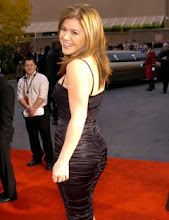
Reese Witherspoon showed up in a look that was frighteningly reminiscent of a Playboy bunny (see picture above), and I visibly shuttered when I saw her on my TV screen. Are we going backwards instead of forwards? Will we be breaking out the corsets and bonnets next year?

The irony is that one of the only women of color on the red carpet was Jennifer Hudson, who, over the last year, has famously replaced her ample curves with ones that are more Hollywood appropriate.

Maybe the lack of curves on the red carpet was the reason why JHud’s new bod seemed to be all anybody could talk about when they saw her. Even the normally infallible Tim Gun felt the need to point out Hudson’s “amazing new figure.”

Even worse, when Ryan Seacrest interviewed Hudson, he said, “You must love getting dressed up now that you have that new body.”

It’s bad enough Seacrest felt comfortable giving Hudson such a back-handed compliment, but his comment is also offensive to the rest of us non-Red Carpet walkers because his message is that if we aren’t skinny, then we shouldn’t enjoy dressing up.

Guess what, Ryan? Real women—whether they be curvier than celebrities or more flat chested than them—like to dress up too!

The bottom line is that the more we talk about Hudson's "new" bod, the more we reinforce the idea there was something wrong with the old one. And, my God, the woman is gorgeous at any size.

After the Golden Globes this year, I wrote about how Seacrest’s superficial and sexist banter on the red carpet hurts us more than Ricky Gervais’ raunchy ribbing of celebrities, and this year’s color-and-curve-free red carpet makes me think it’s time for another course correction.

Over the past few years, we have seen a resurgence of curvy women and women of color, but last Sunday proved that, unfortunately, we’re falling back into old habits. This means that we have to re-double our efforts by continuing to demand more magazines and models with real women and by continuing to vote with our dollars and spend money on female artists of all stripes.

Recently, when asked if the new emphasis on curves would continue, a world-famous designer said that, in fashion, trends come and go pretty quickly, and he imagined that the curvier women we’ve seen on the runway over the past year would not return next season. But if trends come and go that fast, then we wouldn’t have seen the same Kate Moss heroin chic bodies for the past fifteen years. From my point of view, this sounds like an excuse—and one we cannot accept.

Saturday, February 26, 2011

Faster than fast food
by guest blogger Emily Threlkeld

I like to cook.

Actually, let me qualify that: I like to cook the way I like to write poems. It isn't about practicality, it's about self-expression, creating something from nothing.

So while I collect recipes that call for madeleine pans, lavender honey, duck fat, and hours and hours of my time, preparing a daily evening meal for myself isn't something that interests me. This presents a bit of a challenge for me since I've committed to cooking all my meals at home this month.

Making dinner is even less interesting after work. I enjoy my job as a bridal consultant. When a couple comes to register for gifts, I get to know them. I get an idea of what their lifestyle is like or what they want it to be. I help them figure out what they'll need to build their new home together. I walk them around the entire store and help them make smart decisions. In between couples, I help people shop from registries and gift wrap their selections. One way or another I'm dealing with happy people all day. But it does take a lot out of me. I'm on my feet all day, up and down ladders sometimes, running from one end of the store to the other. Most of all, as an introvert, connecting with people is something that takes a lot out of me. It's not a difficult job, but I still come home tired.

Over time I've developed two tricks that help me with the chore of feeding myself once I get home. Maybe they'll help you, too.

1. Keep your pants on. Literally.
Usually the first thing I do when I come home is change from my work pants into PJs. My work pants were uncomfortable in October, when they were just a little bit too tight, and they're uncomfortable now because they're so loose they're falling off me. I change into elastic-waisted PJ pants, kick off my shoes and sit down on the couch to relax. I notice I'm hungry, but as time passes I have less energy and less motivation to get up off the couch and do something. So how to avoid this trap? When you get home from work, as tired as you may be, go directly to your kitchen. Don't take off your work clothes, don't turn on the TV, don't sit down. If it isn't time for you to eat, get all your prep work done. If it is time to eat, start cooking. Or cook first and reheat later. However you want to do it—just make sure it's the first thing you do once you get home. (I know a lot of people love to cook once for the entire week, but living with three men makes that impossible for me. In our fridge, food is devoured instantly; ingredients are not.)

2. Collect practical recipes.
Keep an eye out for recipes that appeal to you. Move the efficient ones to the front of the pile. Twenty-minute meals, ten-minute meals, one-pot meals. Try some of those. Experiment. The more you make something, the better and faster you can make it. You can always try new recipes whenever you want, but it's important to have something to fall back on. Here are three of my current go-to recipes:

Sauteed Bell Peppers over Pasta
Adapted from Twinkle. Family friend, culinary genius.
Slice a bell pepper into thin strips. Cook in a pan over medium heat with olive oil and pepper until soft. Serve peppers on top of pasta—I prefer penne—and serve with plenty of Parmesan cheese on top.
Upgrade: Add some sliced sausage links on top. My personal favorite is chicken and apple.

Tomatoes, Tuna, and Couscous
Adapted from Jules from Stonesoup
Boil water in the microwave. Add couscous, cover, and set aside. Slice a pint of cherry or grape tomatoes and one or two cloves of garlic. Add to a pan with a can of tuna in olive oil. (Don't drain it!) Cook until the tomatoes are soft and the sauce comes together. Fluff couscous with a fork and serve with sauce on top. Upgrade: Add a handful of chopped chives and a drizzle of olive oil to the couscous when you fluff it.

Parmesan and Prosciutto Chicken
Adapted from Jamie Oliver
Have your butcher butterfly a chicken breast into two pieces. (The original recipe calls for just one chicken breast but American chickens are much larger.) Sandwich chicken between two pieces of plastic wrap and use something heavy to bang it down so the breast is the same thickness all the way around. Peel away the top piece of plastic and sprinkle the chicken with grated Parmesan cheese and ground pepper. Top with a slice of prosciutto. Pick up the chicken from the bottom and slam it face down into a pan over high heat. (The faster you flip it into the pan, the less your prosciutto is going to get out of place.) It takes three to four minutes per side and when it's done, the cheese holds everything together. Upgrade: Add fresh thyme and grate lemon zest on top of the cheese. Before serving, add a small drizzle of lemon juice, balsamic vinegar, and/or olive oil on top.

3. Keep your successful recipes somewhere easy to find.
I have mine on index cards in the kitchen. If worse comes to worse and I feel a fast food craving, I go to the cards. I can make all of the above meals in fewer than twenty minutes, minus the time it takes to boil water. Ask yourself if it's really worth it to get in your car, drive somewhere, order something, wait for it, pay for it, come all the way home with it and eat it. In the same amount of time or less, you can have a home cooked meal that's much healthier for you. And look at it this way: you've already bought your groceries. Dinner at home has already been paid for. Dinner out has not.

Hopefully one of those recipes will inspire you to go in your kitchen and make yourself something delicious. Tomorrow, maybe? Report back when you do. Extra credit for photos!

Emily Threlkeld

EMILY THRELKELD is a newlywed living in Raleigh, North Carolina. She's also a writer and a photographer who supports herself being a bridal consultant at Bed, Bath, & Beyond.