Tuesday, June 14, 2011

What a tangled web we re-design


I'm in the process of re-designing the blog and my new companion website, mollymccaffrey.com, so I'm going to take the day off from blogging.

But to tide you over until Thursday, I've posted the new logo here (see above).

What do you think??????

Thursday, June 9, 2011

It's never too late to change:
Belle Vere = True Beauty.


Well, it's about time.

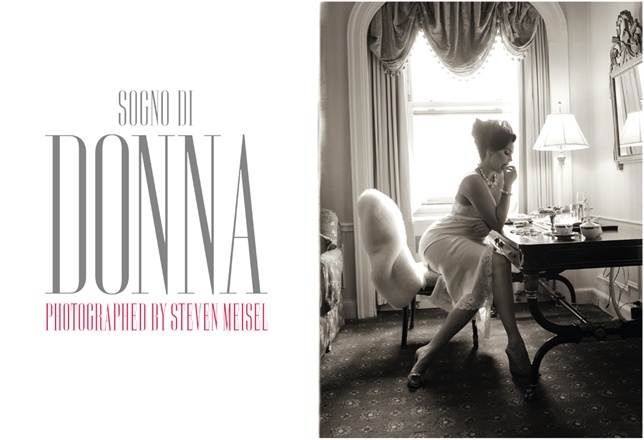
A major fashion magazine has F I N A L L Y featured curvy women on its cover. The honor goes to the latest issue of Vogue Italia, which can be seen above. (The rest of the photos I've included here are from the cover story.) As Time magazine says, "Vogue Italia has thrown the fashion world a major curveball — by placing three plus-size models on its June 2011 cover." (Please not the plus-size models are size six and up.) And even better is that these women look stunning. As one blogger writes, "You see real confidence in their eyes—they KNOW they are beautiful."


I truly believe we are in the middle of a paradigm shift about what it means to be beautiful—people are beginning to believe that beauty does not come in just one size or shape. We're seeing more diversity in women's body sizes in film (Bridesmaids) and television (Mad Men, Huge, Glee), and corporations like Dove are committed to helping us reassess what it means to be attractive.


For some time now, Glamour magazine has been devoted to featuring women of all sizes in its pages, and now Vogue Italia has jumped on the curvy bandwagon. And for the first time ever a first lady with a real body is seen as a fashion icon.


But in order to keep this change happening, we have to keep supporting the movement. I'll probably not get a subscription to Vogue Italia since half the women in it are naked, but I will order the new Vogue Curvy and continue to get Glamour and support real-sized women every chance I get.


Here's one easy thing you can do: vote in this poll about Vogue Italia's choice to feature real-sized women on their cover and tell them you say YES to curvy women!


Tuesday, June 7, 2011

Reader mail


I had a reader of the blog email me last week saying she needed advice about trying to lose weight. She has struggled with numerous diets in the past—not being able to stick with them and also feeling like she'll never be as skinny or attractive as her two married sisters. Since I get questions about this on a regular basis, I thought I'd share my response . . .

Dear XXX,

I'm honored that you wrote to me, and I'm sorry to hear that you're struggling.

I do believe that the first step to losing weight is body acceptance, which is a big part of what my blog is about. If you do not accept yourself the way you are—and like yourself the way you are—you will probably never lose weight and keep it off. So my first piece of advice is to look in the mirror and figure out what about you is most attractive. Most people have one amazing feature—be it beautiful eyes, a perfect nose, full lips, gorgeous brows, adorable ears, a sculpted jawline, or clear skin. (For me, it's my eyes, and luckily, I've always known that.) And I think when people see us, they focus on that good quality—and never see the parts of us that are average or imperfect.

I have a friend who is extremely obese, and after knowing her for a year or so, she told me she thinks that when people see her, all they see is her fat. I was horrified and also knew immediately she was wrong. This is someone who is blessed with a sunny disposition and a gorgeous face. When I see her, the first thing I see is her infectious smile—she is the kind of person who lights up a room. After that, I see her adorable nose, her pretty eyes, and her flattering freckles. I never even think about the fact that she weighs more than 300 lbs. It's not even on my radar. But when I told her this, it shocked her. She thought it was the FIRST thing people saw. In truth, people see your assets first, not your flaws.

So you need to look in the mirror and figure out what it is about you that makes you beautiful. You may not be as thin as your sisters—and trust me I know all about that—but you do have something that sets you apart. I know it.

Once you find that thing about you that you know is attractive and start focusing on that by buying clothes or accessories that emphasize it, you'll notice people will start complimenting you about it too. You say that you're not attractive, but as soon as you decide you ARE attractive, other people will find you attractive too. Confidence is contagious, and once you have it, you will pretty easily find that people—men included—are drawn to you.

After you re-gain your confidence and focus on YOUR attractive features, you can start working on losing weight. I follow a seven-step approach to losing weight that is not a diet, but a lifestyle change. Because my approach allows you to eat junk food from time to time, it's not hard to change your life this way.

Incidentally, the reason you want to eat junk food every time you go on a diet is because the diet tells you not to eat junk food. Any time someone tells you not to do something, the natural response is to want to do it. That's one of the main reasons diets don't work. The other reason diets don't work—and 90% of dieters gain back the weight—is because our bodies get used to eating less, and when the diet is over and we go back to eating more, our bodies store those extra calories rather than burning them. These are the two reasons I am totally opposed to dieting. Instead of dieting, here's what I recommend on the blog:


Also, you may want to read my manifesto and my post about how I define the word diet. You should know that though my approach will work in the long run, it is not about quick results as much as lasting ones. Honestly, it may take you five years to lose all the weight you want to lose. But it will work.

Finally, remember that not everyone has the same body. You may even have a different body than your sisters who share your genes. I grew up with a rail-thin sister, and it took me years to realize my body could not possibly look like hers. But neither of our bodies are perfect. She hates that she has to wear a padded bra, and I hate that I need spanx on special occasions. Either way, no one is perfect. And no one body is perfect either.

I really hope that this helps. Please check in with me and let me know how this plan works for you. I would love to hear back from you again.

Good luck!
Molly

Thursday, June 2, 2011

Summer love handles . . . a plea to all
the men out there who like to go shirtless

Ah, summer . . . t-shirts, cut-offs, flip-flops . . . the smell of a neighbor's fire pit, the sound of a distant lawn mower. . . I'm really enjoying all of the signs of summer even though the season doesn't officially begin for about three more weeks.

But one thing I'm not enjoying now that the days are "hot as balls" as my friend Kristin said yesterday is that the heat brings with it another summer tradition, an unwelcome one:

men without their shirts on.

Now, don't get me wrong, I love it when we come across a buff runner sans shirt on the walking trail, but I would happily give up that rare occurrence if I never again had to see his polar opposite: the all-too-common out-of-shape guy strutting around the frisbee golf course without a shirt—or the tennis court or the golf course or the basketball court or fill in the blank.

I'm all about body acceptance, but taking your shirt off in public isn't about body acceptance if you ask me. It's about exhibitionism. And maybe self-centeredness too. Because the message is, Look at me! I don't have my shirt on!

And then I look and think, Why the hell did I do that?

In some ways, it feels like a violation of my privacy. My eyes shouldn't have to be exposed to man breasts and love handles and pale stomachs with dark hairs crawling across them like spiders.

It also feels a bit selfish since women can't do the same.

The message is: I'm hot, so I'm going to strip down, but you women just have to deal. Kind of like when your older brother got to stay out later than you and spent his whole day flaunting the fact that his curfew was one instead of midnight. I don't like the selfishness implicit in that message.

Who knows? Maybe I'm just jealous, but it bugs me when a guy goes shirt-less in a public venue. I can't take my shirt off, so why should he?

It's different on the beach, a place where there is an unspoken agreement that everyone can let their shit hang out—men, women, and children. You can't complain about it because you're doing it too. And if for some reason you're not, you know that stepping onto the sand means you've got to expect to see something unpleasant.

But in the park, it just seems wrong since it's only the male sex that can reveal—at least legally—a part of the body that doesn't normally see the sun.

So until women are allowed to take their shirts off in public, can you men out there please—pretty please—just keep your sweaty shirts on?

Tuesday, May 31, 2011

Killing Us Softly: Advertising's Image of Women


This video is going around right now, and it's an incredibly important one for us to watch because it emphasizes the point that our obsession with thinness is a public health problem.

I could not agree more.

But though I think this speaker means that our obsession with thinness is a public health problem because it leads to eating disorders and body dysmorphia (something I believe all American women have), I also think it's a public health problem because it leads to obesity.

Sometimes it feels like we have two choices in our country—be thin or be fat. Since being thin in this country means having almost no body fat, which is impossible for those of us who are genetically inclined to be curvy, it's easy to give up and say, if I can't be thin, I might as well eat whatever I want.

Our obsession with thinness also leads to obesity because it causes us to embrace unhealthy crash diets that nearly always—90% of the time—cause us to gain back more weight than we lost.

Two celebrities are quoted as having spoken out about the problem of making women look flawless to the point of being unreal in the media: Cindy Crawford and Kate Winslet.

Crawford (pictured above in before and after shots) says she wishes she looked like Cindy Crawford, indicating that she doesn't look like the Crawford we see featured in magazines and on television.


And about the magazine cover above, Kate Winslet said not only that GQ trimmed her thighs by a third without her permission (the photo on the right is the original), she also says, "I don't look like that, and I don't desire to look like that."

Bravo, Kate.

(And what I don't get is what was wrong with her legs in the original photo???)

The real question is why don't more celebrities have a problem with this? Why aren't they all putting their foot down on this issue? Why aren't they demanding to be depicted in more accurate ways since we all know that it hurts all women in the long run?

I suppose they're afraid that if they speak out, their careers will be over. And it's certainly true that Crawford and Winslet are two of only a handful of untouchable women in the media, so I admire their desire to use that power to speak out. But what about Julia Roberts and Reese Witherspoon? Sandra Bullock and Cameron Diaz? Angelina Jolie? Why aren't these women speaking out and trying to combat this problem?

If they are and I've missed it, I'd love to hear about it. If not, it's time to step up, girls.

Thursday, May 26, 2011

Why, in my fantasy life, Annie Leibovitz is my
best friend and travels with me everywhere I go

molly
I was spending the day with a friend of mine recently when she showed me some pictures from a recent family trip. I noticed almost immediately that there weren't any pictures of her, and when I asked about it, she said, "I don't like having my picture taken."

I get it. I really do.

Because that was my attitude most of my adult life—until a few years ago, I HATED having my picture taken and looked pretty awkward almost every time I was forced to do it, which I talked about in my "Who is the girl in the picture" post. I'm still not great about posing for photos now, but I'm working on it and try my best to have a good attitude, which I think is crucial to taking a good photo.

Lately, though, I'm beginning to wonder if it's about more than just having a good attitude. Over the past few months, I've had the opportunity to have my picture taken by more than one professional photographer, and I am always shocked by how good the results turn out. (The photo of me above was taken by one of those pros.)

As a result, it started to occur to me that maybe the reason I hate having my picture taken is because I don't have a professional doing it all the time. In fact, it's usually my husband or one of my friends taking my picture, and they usually do it quickly—in between talking and hanging out—without really thinking about it.

All of this had been in the back of my head when I saw a new photo of a friend on Facebook and actually thought, "Wow, that doesn't even look like her. She is so much more attractive than that." And that's when it hit me—the reason our photos don't look as good as the ones we see in magazines is simply because we don't have a professional photographer following us around all the time.

Maybe this sounds obvious, but I have witnessed too many people—men an women—bemoaning the way they look in pictures for me to believe that people understand this is the case. I think we all want to look like a celebrity every time we have our picture taken even though we don't have half the resources that most of them do.

And then I saw something that made me sure that taking a good photo doesn't usually happen by accident but rather requires some serious effort as well as a professional photographer.

I was watching Letterman a few weeks ago when Courtney Cox was on the show talking about a recent trip to St. Bart's. While she was there, Letterman held up this photo of Cox from that trip:


Letterman oooohed and aahhed over Cox's amazing physique, but she resisted the compliment, explaining that she doesn't normally look like that and that she was doing everything she could to look her best when the photo was taken.

"Well, Dave," she said. "You know when the paparrazzi are there, so that's not real . . . I mean that's real, but I was working it pretty hard . . . We made a joke about it. Let's see how Sports Illustrated we can get. And I really was like . . . I sucked in, I moved my body, and my arms are streched out. I don't walk like that!"

Cox even claimed that Letterman would be horrified if he saw the way she sits on the beach when nobody is looking and imitated herself seaside, hunched over and limp.

Whether you believe it or not, her message was clear: people don't normally look the way she did in that photo. And for some reason, I believed her. I believed that she could suck in her gut and pump her arms and legs in such a way that put her best features on display.

Do I believe I could strike the same pose and appear as hot as Cox does in her string bikini? No way, but I do believe that trying to look good and believing you can look good goes a long way towards accomplishing that goal.

And while writing this post, I decided to Google "Courtney Cox at the beach" to see if there were any pics of her looking the way she described, and believe it or not, one of the first pictures I came across was one of Cox looking the same way she imitated herself looking on Letterman . . .

Is she still beautiful? Absolutely. But she also looks real because she's not posing for the paparazzi.

It's easy for us to imagine that the beautiful people look beautiful all the time, but the truth is, when they're just being normal and goofing around with their friends and an iPhone, they take crazy photos too.

The only difference is that their bad photos never show up on Facebook.

Tuesday, May 24, 2011

Ten steps forward, one step back

Last Thursday, I wrote about why Bridesmaids is a movie that redefines the role of women in film today and why we, therefore, must all get behind it and see it.

As I said then, the movie does this by:

1) avoiding the cliches of the rom-com/chick flick,
2) focusing on the friendships of women instead of a love story between a man and a woman,
3) thereby creating a new genre (the female version of the bromance),
4) passing the Bechdel test,
5) featuring actresses who are not A-listers
6) and women who of all sizes
7) who talk about sex
8) and other real things and
9) are also fully developed characters.
Finally and just as importantly,
10) the film was written by two women—Kristin Wiig and her former Groundlings castmate Annie Mumolo (pictured below).
But what I didn't talk about is the one thing the movie gets desperately wrong.

As I indicated last week when I said that there was more to say about her, this misstep has to do with Melissa McCarthy's character, Megan, who is also the sister of the groom.

Before I saw the film (or any portion of it), I was thrilled that Melissa McCarthy was part of the cast. I loved her on Gilmore Girls, and even though I'm not a fan of her new sitcom, Mike & Molly, I think she's an outstanding actress. And I am happy that her performance in Bridesmaids is getting the positive attention it deserves. But . . .

. . . when I first saw McCarthy in the previews (and on the big screen), I was horrified. The people who made Bridesmaids took an adorable woman . . .
and made her look plain, manly, and mostly unattractive . . .
Not only that, they made her character into a clown who routinely acts the part of the fool and who inappropriately hits on the in-flight air marshall, saying things to him like, "You feel that heat? It's coming from my undercarriage."

The message is clear—a big woman can't hit on a man in a movie (or be in a movie at all) unless we are allowed to laugh at her doing so.

Admittedly, this problem is counteracted to some degree by the fact that McCarthy's character is one of the more well adjusted and confident people in the film, and she's also the voice of reason—she's the one who goes to Kristin Wiig's Annie when she hits bottom and convinces her that she needs to change her life. But that moment still happens inside the bubble of Megan's crazy antics—she brings her nine puppies—yes, nine!—when she rescues Annie from her wallowing and then insists on giving Annie a ridiculous body-slam-type hug before she leaves, reinforcing the message that this character cannot really be taken seriously.

There is a long history of making the "fat" person the funny guy in movies, a history that goes back to classic comedians like John Candy, John Belushi, Chris Farley, Jason Alexander, John Goodman, and Roseanne, and continues today with current comedians such as Kevin James, Larry the Cable Guy, Jonah Hill, and the pre-diet Seth Rogan among others. In fact, in our society, one of the only ways it is acceptable to see big people on the big or small screen is if they're cracking jokes. Or if people are laughing at them.

And, to be honest, I had hoped that a movie that spends so much time redefining how we see women in film would not have given into this cliche. Not only is it cheap and easy humor, it's also rather offensive.

At the same time, I think it would be foolish to focus on this one problem—even though it's a real problem—and ignore all the good that Bridesmaids does for women.

The bottom line is that this movie is good for women—women of all sizes. Yes, the writers made a mistake by depicting McCarthy's character as the butt of most of its jokes, but it did so many other things right that I have to believe it will help all of us—big and small—in the long run.