Tuesday, September 7, 2010

Cray cray on Capitol Hill

196 pounds
I don't know if you've heard of Michaele Salahi or not.

To be honest, I wish I didn't know who she was. But as fate would have it, I learned of her existence when she and her husband crashed the Obamas' first state dinner last fall.

Crashing a presidential function in the post-9/11 era?

Not smart, Micheale. Not smart.

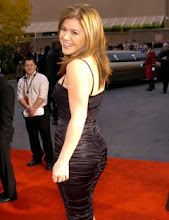
I could have written off that misstep as a one-time display of stupidity, but as of late, Real Housewives of D.C. star Salahi has been going after the stupid crown like Paris Hilton at a key party.

Because not only did the 44-year-old Salahi just pose naked for Playboy—classy!—she also revealed that she is completely cray cray in a failed attempt to deny she is anorexic. When an In Touch reporter asked what she thought of the rumors of her eating disorder, Salahi denied it and explained that "I start the day with a hot chocolate and cereal—I love Lucky Charms or Kashi GoLean—then some fruit. I don't really eat a lot in the middle of the day. I have an early dinner, which is always a salad, with plain chicken, grilled or broiled."

The woman only eats cereal and salad and thinks she doesn't have an eating disorder?

C r a z y !

To top it off, Salahi insulted all of us who are not as thin as she is when she said, "If [the women who call me anorexic] get out there and move, they will look like me and be thin, and it'll all be good."

You can call me crazy if you want, but I don't think that if we all stopped eating anything but cereal, hot chocolate, and salad, we would "all be good."

I also don't think that if we just "get out there and move" we'll all suddenly look like Salahi, nor do I think most of us want to look like a middle-aged version of Back-t0-the-Beach Barbie.

Unfortunately, the answer to our obesity epidemic is not that simple, and I guess I should have known that someone who is so desperate for attention would probably not understand the intricacies of our country's weight problem.

This whole thing just reminds me of something I already knew . . . never crash a Salahi party, especially if I haven't eaten.

Thursday, September 2, 2010

"All asses were not created equal."


197 pounds
Today, Levi Strauss & Co. launched their new jean line—
Curve ID, also known as "Custom Fits" for women, which they claim "will provide nearly any woman a five-pocket pair of jeans that feels custom fit to her shape."*

Curve ID jeans come in "three fits: a slight curve (for the woman who finds that regular jeans 'fit in the hips and thighs but are too tight in the waist'), a demi curve (if your jeans 'usually fit in the waist but don't flatter the figure') and a bold curve (if jeans 'fit in the hips and thighs, but gap in the back')."*

Personally, I could not be happier to see the "bold curve" model for women whose jeans tend to gap in the back. This is a constant problem I have with pants, forcing me to either cinch my waist with a too-tight belt or wear long shirts to hide the gaping hole that gives people standing behind me a panoramic view of my Jockeys.

According to the LA Times, Levi Strauss "studied women around the world, conducting thousands of interviews and looking at 60,000 body scans of women in 13 countries" from whom they learned that "jeans shopping ranks right up there with buying bras and bathing suits."

Uh, no kidding.

Are they just figuring this out now?

To combat this problem, Levi's even offers a type of body calculator that lets you find your "Levi's Curve ID."

A Levi's rep claims that this new line "account[s] for 80% of the women's body shapes in the world" and that "when we launch the fourth one—our most extreme curve—at the end of this year or early next year, then we'll have 96% of women covered."*

What's also interesting is that the new line is "about shape not size." As the photo below demonstrates, women can have the same waist size (as these women do), but still have markedly different body shapes. Rage_levis_curve
Until now, all three of these shapes were shoveled into the same size four jeans. Now they have more options.

Waist sizes will range from 22 to 34-inch waist, and prices will go from $60-148, expensive from my point of view, but still far less than true custom jeans and, therefore, possibly worth the cash if it means that I won't have a gaping hole in the back of my pants.

Levi's is currently offering free shipping and returns on the Curve ID line. Use this coupon at checkout:

Wednesday, September 1, 2010

Taking it all off


What's the difference between women taking off their clothes in a movie and men taking off theirs?

Find out in my column on Bitch Flicks today... http://www.btchflcks.com/

Tuesday, August 31, 2010

Eat, eat, eat, and then eat some more

196 pounds
As much as I hate to admit it, classes started yesterday here at WKU, and that means I have to go back to a much more challenging schedule . . . getting up earlier than I want, showering every single day (can you imagine?!), squeezing in exercise whenever I can, and—most importantly—eating on the go.

To be honest, it's a recipe for disaster.

And, because of all the stress, I can't help but find myself longing for the quick fixes—fast food, hi-cal carryout, frozen pizza and other meals that come in a box.

But if I start eating like that, we all know what will happen—my body will retaliate, and the scale will go up, up, up, and up some more

No, I can't give into those very strong desires, and there are two ways I'm avoiding doing that.

The first way I'm overcoming my stress-fueled desire for junk food is a trick you can read all about in my "Nothing beats a home-cooked meal" post. Suffice it to say that when school is in session, Dave and I try to cook all of our meals for the work week over the weekend. We have to be at school Monday through Thursday this semester, so we each cook one meal on Sunday and make enough that those two meals will last us four days.

The second way I avoid junk food when I'm this is busy is by making sure that I eat healthy snacks all day long--a snack between breakfast and lunch, another between lunch and dinner, and then sometimes a little one later in the evening.

These snacks don't have to take much preparation either—anyone can put a piece of cheese and and an apple in a bag or grab a container of yogurt—but I love making gourmet snacks so they are even more appealing. Last night I spent ten minutes making homemade salsa (tomatoes, red pepper, jalapeno pepper, onion, lime, and red vinegar), and I ate a half-cup of that this afternoon with a few tortilla chips this afternoon. (The homemade salsa makes store-bought salsa taste about as appealing as motor oil.)

I've also been known to repeatedly make cottage cheese dip to eat with raw vegetables like red pepper, cucumber, and carrots. (If you're interested, the cottage cheese dip—modified from Moosewood—is made by simply blending cottage cheese, feta, dill, and green onion.)

The result of eating little snacks like these all day—about every two hours—is that you'll never really feel hungry and, therefore, find it much easier to avoid unhealthy temptations. I put this theory into practice today, and by the time I left school, I didn't have any desire to pig out, which is usually the case with me after a long day at work.

By no means am I the first person to advocate this technique—we've all heard of it before—but it really does work. And it's especially effective when you're dealing with an unusual amount of on-the-job stress and fatigue.

Thursday, August 26, 2010

Step #1: Like yourself
a.k.a. what makes me different from everybody else


196 pounds
I realized the other day that there are some basic things I have yet to say on this blog, so I'm going to try to say them over the next few weeks.

When I started this blog, I began by slowly outlining my belief system and the ways which we can all lose weight without dieting. But I only got through five of those steps (which are are still included below right—scroll WAY down—under the title, "How to Lose Weight without Dieting"), but I need to get back to those steps and finish them.

Tonight I want to start filling in those gaps by addressing a question that has been posed to me lately: how is this blog—and my approach—different than any other program that proposes a change in lifestyle?

1) First of all, I want to say that in many ways my approach is NOT drastically different than any weight loss program that advocates lifestyle change. The way to lose weight and keep it off is by making a lifelong commitment to being healthy—yes, that includes exercising and eating healthy foods, but it also means doing those things in moderation AND giving into indulgence from time to time.

2) But, more importantly, the number one thing I advocate on this blog is accepting ourselves the way we are. I've said it before, and I'll say it again: I believe we have to like the way we look before we can even begin to be healthy and/or lose weight. And that's what makes this blog and my approach different from everyone else out there.

Because I believe that most "healthy living" programs are predicated on the belief that if people find themselves unattractive, they will want to change their lives, they will want to diet.

And I just don't buy it.

(On top of that, I think it's an ugly kind of fear-mongering.)

I believe, instead, that only people who truly like themselves can make that change.

So if you haven't yet figured out what you like about the way you look, it's time for you to do us all a favor: put on your favorite outfit, go look in the mirror, and find something to like.

I know that if you look hard enough, you can do it.

Tuesday, August 24, 2010

You are what you eat

196 pounds
There is only one official month of summer left, and as a result, I'm noticing that there is less and less food in my CSA basket each week.

If you don't know, CSA stands for "community shared agriculture," and members of a CSA "invest" in a local organic farm every spring and then get "shares" of the farm's produce every week during the season—for us, that means from May to November. The cost for our CSA is $400 for six months if you pay all of it up front, which works out to be a little more than $15 a week. Not a bad deal for a good-sized basket of organic produce.

In May the basket which holds our share is pretty light—filled about halfway—but by June its overflowing with the best vegetables and fruit I've ever eaten in my life. At that point, there is usually too much to fit in one basket, and we have to carry watermelons under our arms like footballs from the pick-up spot. We get everything from beets to blueberries, and we love it all.

But now we're in a slow period. Most of the summer produce has been harvested, and as we wait for the fall harvest to come in, our baskets are again only half-full. And when our share arrived tonight, I thought about the fact that even half-full, the CSA is still an amazing deal.

And this makes me wonder—if it's such a good deal, why is it so hard to get other people to join? We've told all of our friends about it, but we only know five people who are doing the CSA with us this year.

Some people complain about the fact that we don't know what we'll get every week, but for us, that's half the fun. The first time we got beets last year, we had no idea what to do with them. By now we know that there is nothing better than tangy beet risotto or warm roasted beets on top of a bed of mixed greens and goat cheese.

Still, most people we know don't seem interested, which makes me marvel at our inability to adapt.

We all know that organic food is the best thing we can eat—the only problem is that it's expensive, a problem easily solved by joining a CSA. As I said in my last post, scientists have now proven that chemicals and pesticides make us gain weight, so I'm not sure why anyone would pass up the opportunity to get pesticide-free produce for such a cut rate.

And I've witnessed a similar problem with locally grown, grass-fed beef.

A friend of ours—who is also in the CSA—decided to raise his own steer a few years back. We would go over to his house for dinner parties and cookouts and see the handsome animal in his backyard, feasting on acres of gorgeous Kentucky grass and flirting with the neighbor's cattle. After a few years, it was time for the steer to deliver on his promise of providing our friend—and many others (since it was too much for one person to eat)—with a winter's worth of beef. Our friend invited a group of us over for one of the first meals, and I was surprised to see that another friend of ours—a meat-eater, in fact—turned his nose up at the offering.

"I don't eat anything I've met," he said, but I didn't get it.

This was a person I knew had eaten frozen dinners for lunch—meals with mystery meat and dehydrated vegetables—but he was unwilling to eat locally raised, grass-fed beef?

Was I missing something?

The problem is that we don't like to think about where our food comes from. We just like it to appear on our plates—in edible form—like magic. (That might be why eating out is so appealing.) But the truth is that juicy hamburger you cooked on the grill last 4th of July came from a cow. And, unfortunately, it probably didn't come from a local cow or a cow who eats grass and it almost certainly didn't have as long and happy a life as our friend's cow.

The same could be said about our CSA produce. Yes, sometimes the corn shows up with a few worms, and more often than not, the carrots are always dirty. That's because corn grows in a field, and carrots come out of the ground. And once we realize that, maybe we won't be so obsessed with our food looking so neat and clean. Because, in the end, that neat, clean package of ground beef and that beautiful winter tomato probably come with chemicals and fillers that will make you feel pretty dirty in the long run.

Thursday, August 19, 2010

"Smothered in Delicious Yellow Chemical Sludge"


Thora Birch as Enid in Ghost World, 2001

198 pounds
A few weeks ago I went to see The Kids Are All Right, an amazing movie, which just happened to be playing at a massive thirty-screen multiplex that had recently changed ownership.

The first sign that things were different occurred when we pulled up, and there was no longer a sign of any kind telling people what was located inside the building. Instead, there was just a piece of large poster board with the name of the theatre painted on it in thick black paint. Now remember this is a thirty-screen multiplex, and it just had this poster stuck to the front.

I knew immediately something wasn't right.

When we were waiting in line at the ticket booth, we also noticed that there were a half dozen employees flitting around with artificial smiles on their faces, asking customers if they needed help with anything. It felt like we had died and gone to Stepford.

But the weirdest thing of all happened when we got to the front of the line.

Every single person who bought a ticket was rewarded with a coupon for a free medium-sized drink and a small bag of popcorn. At first I thought these coupons were being passed out at random, but soon it became obvious that EVERYONE was getting them.

Initially I was excited about our luck—I almost never splurge on popcorn or drinks at the movie theatre. Not because I don't want them, but because they cost so darned much.

(If you haven't been to the theatre in a while, you should know that you can no longer get a small drink and a small popcorn for less than ten dollars, which means this theatre was passing out the equivalent of ten bucks to every viewer.)

But not long after I got my free snacks, I started to feel differently about them.

As we walked to Screen 22, I looked around and considered all of the other moviegoers. Some were big and some were small, some were pretty and some were not, but despite our many differences, we all had the exact same thing in our hands: a small popcorn and a medium drink. It felt like the theatre owners were using some kind of mind control to make us all do the same thing. It felt like we were pod people. And suddenly my free popcorn and soda seemed rather grotesque to me.

In the theatre, I ate some of my popcorn and drank some of my soda, but it wasn't the same—my enjoyment was half-hearted, and I barely finished a third of what I had. I just didn't want it anymore. It was like I was experiencing the same thing people always say about country clubs: nobody wants to be a member of any club that will have them. And I didn't want any part of an unhealthy snack that someone had just handed me, free of charge. Not only did I not really want it, I was also hyper aware of how gross it was—the yellow chemical sludge* known as butter movie theatre land was collecting inside the crevices of my artificially colored popcorn like an environmental disaster.

At the same time that I was disgusted with the food, I was also disgusted with myself—Had I really longed for this stuff on so many occasions before? What was it about this crap that had appealed to me so much? In that moment, I had no idea why anyone would voluntarily pay for such a snack even though I'd done it more than a few times myself.

The result was that I wanted to eat less popcorn and drink less soda—that night and every day since then. And it made me wonder if part of the appeal of eating something so unhealthy is that we're not supposed to eat it.

When I was sixteen, I had jaw surgery that left me unable to eat solid foods for six weeks. In the time leading up to the operation, my doctors told me that it was one of the only times in my life when I could eat whatever I wanted because I'd be losing a lot of weight during my recovery. For a few days, I ate junk food 24-7: Twinkies, Doritos, Mac 'n Cheese. But after a day or two of that, I got sick of it and went back to my normal diet.

I think that's exactly what happened at the multiplex that night—since I was allowed to eat whatever I wanted, I didn't really want any of it anymore. Of course, that made me ask myself, what would happen if I let myself eat whatever I want all the time?

I've always believed that indulgence is an important part of a healthy lifestyle, and I've always known that if you deny yourself something you want, you'll only want it more. But I've also believed that giving into those temptations every once in a while helps you keep your cravings in check. But maybe—just maybe—if we gave into them whenever we wanted, they would lose their appeal forever.

I wish I could say I believed it was that simple to kick the junk food habit, but I'm not entirely convinced. But I will say this: I'm staying away from the yellow chemical sludge as long as I can.

*That's what Enid (pictured above) called it in Ghost World.